Category: Uncategorized

  • Another Saga About Weight Watchers


    Dearest Readers:

    Last week, I stayed away from my Weight Watchers meeting, all to the credit of the nightmare of traffic congestion Mt. Pleasant, and Charleston, SC is enduring due to the West bound side of I-526 being closed. The bridge is a bit unsafe now, so after finding one of the problems and planning to “temporarily fix” the problem, a nightmare of traffic is tolerated by everyone – including tourists! One can only imagine what will happen with traffic when Spoleto debuts this weekend. Also, tourists will be coming to Charleston and the beaches. Hey people. Guess what! We only have two bridges to cross to get from Charleston to Mt. Pleasant and Isle of Palms and Sullivan’s Island. Be certain you do a restroom break before you leave! There are no restrooms on the bridges!

    Today, I decided to return to Weight Watchers after binging all weekend and this week. I baked a cake on Sunday. Big mistake! It was a butter nut cake with cream cheese frosting. The recipe called for four cups of sugar. I cut it back to one and one/half cups. Believe me when I say, this cake was incredibly sweet. Good thing I cut back the sugar contents.

    I wasn’t certain if I wanted to return to Weight Watchers this week. I was skeptical about the traffic. Much to my surprise, the traffic moved well. Arriving at Weight Watchers, I let them know I could be counted, but I was not weighing. Cake does make one gain weight. Yesterday afternoon, I tossed the cake from Sunday into the trash! Proud of myself for doing that, but still discouraged that I allowed myself to binge, I chose honesty as the best policy. Yes, I knew I was binging, and I had to really dig deep to understand why.

    I’ve had many issues lately. A class reunion where I felt as if I didn’t belong. Have no idea why, with exception, I permitted old memories of my life as a teenager to creep into my soul once again. Prior to leaving for the reunion, we discovered a leak within our house – just where the leak was, we didn’t know, so our water bill has escalated from an affordable $55-$65.00 monthly to an outrageous $165.00 for April, and May’s bill increased to $265.00 monthly. I haven’t a clue what June’s bill will be! So much for a monthly budget!

    After spending over $500 this month to find the leak, I’ve been so worried about my monthly household budget that I chose to stuff my face — with cake!

    Now, I’m pleased to say, after a serious conversation with myself, and sharing my binge eating today at Weight Watchers, I’ve decided to get back on the horse and ride. This time — NO BINGING!

    I am tracking what I eat and I’m practicing healthy eating. Freestyle. Next week, there will be a weight loss, or a ‘maintaining’ – not a weight gain. And now, my friends, I must get back on the treadmill and my ab machine to get back in the game. I must remind myself: “It’s when things seem worse — YOU mustn’t quit!

    Weight Watchers works. Especially Freestyle!

    I’ll share more next week, after the meeting. Bon Appetitt!


  • LEARN TO CONTROL YOUR DIABETES, BEFORE IT CONTROLS YOU


    Late one evening while watching TV with my husband Phil, I reminded him to check his glucose level. His reply was the usual, ‘I’ll do it later.’ Knowing him as I do, I was frustrated. He has the tendency to procrastinate, so I chose a different approach. “Why don’t you check mine and let’s compare.”

    Never did I expect my little psychological game to backfire. Pricking my finger, I waited in anticipation. When the meter flashed 468 on the screen, I laughed. “Something’s wrong with your machine. I do not have Diabetes. I do not have any symptoms. I’m fine.”

    “You’re always tired,” my husband said.

    “Isn’t everyone? If someone else walked in my shoes, they would be tired too.”

    While it was true I was always tired, I suffered from insomnia and never felt rested. I worked ten-hour days at work and at home, working as a professional and moonlighting at night pursuing my writing career. My fingers were not numb, I didn’t suffer from increased thirst, and I certainly did not have unexplained weight loss. My mother had Diabetes so it does run in the family. Unexplained weight gain? Could that be a symptom?

    The next morning I visited the doctor’s office, confirming the diagnosis of Type II Diabetes. My glucose level at Dr. Knepper’s office was 362. When he opened the door to discuss my condition, I was in tears. How could this happen to me? I ate properly, at least I thought I did. I did not exercise, and fast food was a part of my weekly meals, due to my crazy work schedule. Dr. Knepper reassured me I could recover and he encouraged me to learn all I could about Diabetes.

    “I’m a writer,” I said. “I can become an advocate, if needed.”

    Soft spoken and kind, Dr. Knepper nodded. “Let’s take it slow for now. We can get this under control. I want you to focus on your food intake, and what you are eating. Watch carbohydrates, increase your water intake and exercise. Check your glucose level at least three times daily and keep a record of it. I want to see you in three months. We’ll do blood work to see what your A1C level is.”

    I had a lot to learn about Type II Diabetes. Leaving his office armed with a handful of prescriptions, a meter, booklets, and a fearful look on my face, I chose to learn all I could about Type II Diabetes.

    That afternoon, I performed a Google search, typing in the key word of Diabetes. The wealth of information was informative, especially the web site of the American Diabetes Association, http://www.diabetes.org/home.jsp. I was able to click on information about Type II Diabetes, condition and treatment, a listing of resources, and so much more. Recognizing it was time for me to make a lifestyle change; I started building a plan of attack.

    My New Years resolution for 2005 was to join a gym and lose weight. After the diagnosis of Diabetes, I was motivated and determined to change my life. I stopped visiting fast food joints for lunch, choosing to eat fresh vegetables and healthy snacks, instead of chocolate, or desserts. After work, I drove to the gym, worked out, and learned more about proper nutrition. I attended a nutrition class with a Diabetes nutritionist, asked lots of questions, and changed my diet, discovering the art of portion control.

    Much to my surprise, I learned that sugar was not necessarily the enemy for people with Diabetes. Portion control, monitoring glucose levels, and limiting carbohydrates were the keys to success for Diabetes management.

    Checking my glucose levels three times daily encouraged my husband to monitor his levels. He was diagnosed with Diabetes in 1992 and he rarely monitored or practiced portion control. My determination to get my Diabetes under control encouraged him; however, when his levels were higher than mine were, he was defiant.

    “I don’t understand. You had the same thing for dinner that I did, and your levels are lower. It’s not fair,” he said, shaking his hands.

    “Portion control,” I teased. “You had seconds. I never clean my plate. You go back for seconds, and you always snack late at night.”

    “Whatever,” he grumbled.

    Our competitive game of Diabetes management was underway and this time, I was the winner!

    Three months later, my doctor was amazed how quickly my A1C level had dropped from 8.5 to 5.4. His goal was ‘6.5, but that could take a year,’ he said to me in February 2005. ‘Now, you’re my new poster child for Diabetes.’

    Pleased with how quickly my eating and Diabetes management habits changed, I was still a bit annoyed that I was not losing weight. Inches were falling off of me. In three months I dropped two inches from my chest, four inches from my waistline, and two inches from my hips. My weight failed to drop at all.

    “It’s hard for a Diabetic to lose weight, especially if you have insulin resistance,” Dr. Knepper said. “Don’t get discouraged. Your A1C level is great. I’m amazed how quickly you got it under control.”

    “Insulin resistance,” I moaned. “Is that why my glucose level is so much higher in the morning?”

    “Probably. Keep doing what you are doing, and don’t get discouraged. I’ll see you in three months.”

    In June 2005 my position at the university ended when the campus relocated. With the closing of that door, I chose to open a window to my writing career. Now I had a bit of freedom to do what I wanted to do. I walked my dogs every day, worked out three to five times a week, and my weight decreased. By August 2006, I had lost a total of 26 pounds, and many inches. A1C levels were averaging 5.9, cholesterol levels were decreased to a healthier level, and I had more energy and self-confidence. Dr. Knepper was amazed and so proud of me. He had no idea how proud I was. Meanwhile, Phil’s A1C levels continued on a dangerous roller coaster ride. His doctors prescribed additional prescriptions and insulin injections. His reluctance to change his eating habits with portion control inspired me to continue monitoring my eating habits and glucose levels. Horrified of needles, I was determined not to join him. Each time he reached for his injection, I left the room.

    Controlling Diabetes is now a lifetime commitment for me. My daily routine is a personal allegiance to educate myself and the public about the proper steps to Control Diabetes. My doctor is pleased with how quickly I was able to get my Diabetes under control. As for myself, I am proud of my new willpower. Before Diabetes, I procrastinated about life, my health, and my writing career. I made excuses for everything. Now, as a Diabetic, I want to do all I can to educate others, while educating myself. Diabetes is not a death sentence, but a way of life. A condition that can be monitored and managed through exercise, proper eating habits, portion control, and modern medicine. I plan to live my life as a healthy diabetic. So can you.

    Daily Rituals to Monitor Type 2 Diabetes

    1. Seek professional care. Follow your doctor’s advice and learn all that you can about Type 2 Diabetes.
    2. Monitor glucose levels. I check my levels every morning, afternoon and evening.
    3. Exercise. Take daily walks. You will learn to appreciate the little things in life again – like hearing a chirping bird, saying hello to neighbors, and enjoying the freshness of morning air.
    4. Change your eating habits. Instead of going back for seconds, do not. Learn to eat slower, while enjoying the taste of food.
    5. Get regular physicalGulf Shores, AL 2008 082s. I confess, I did not, until Type 2 Diabetes knocked on my door. Now, I follow the advice of my doctor, and myself.
    6. Do not get discouraged if you have difficulty losing weight. Keep active and have a daily exercise routine.
    7. Visit the web site http://www.diabetes.org/home.jsp and learn all that you can about Diabetes. Knowledge is power.
    8. Diabetes is a lifestyle change, not a restriction of distasteful meals and social restraint.
    9. Think of portion control. Working as a professional photojournalist, there are times when my willpower is put to the test, especially during luncheons or special dinners. When dessert is placed before me, I eat one or two bites and leave the rest. Portion control is the key, not a constraint.
    10. Monitor. Your food intake. Your glucose levels, and your weight. Even a small reduction in weight is better than an increase.
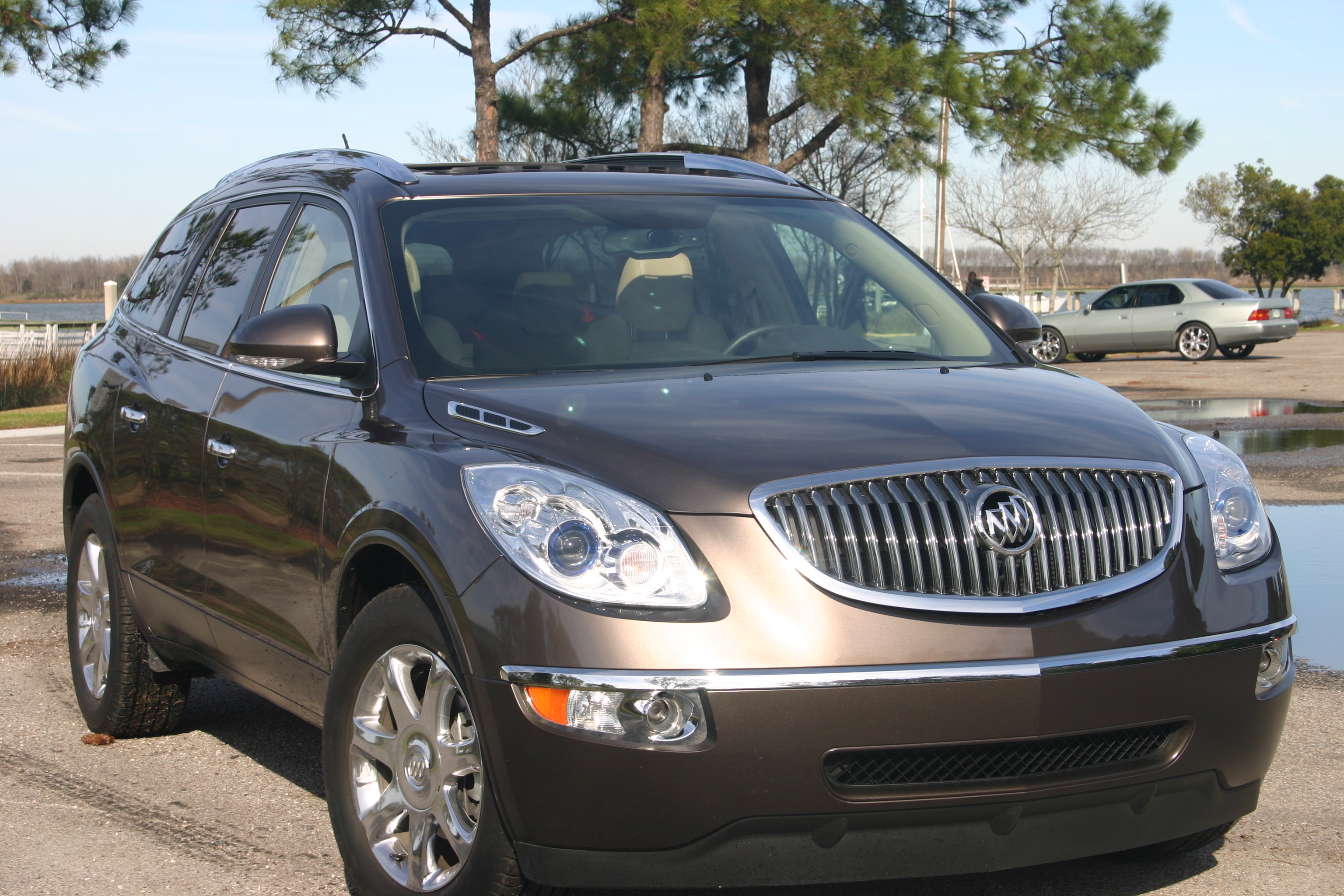
  • Charleston, South Carolina and the Buick Enclave Graceful but Stately, the Enclave and Charleston Are a Class Act


    IMG_5327.JPGDearest Readers:

    Below, is a story I wrote for Buick Magazine in 2009. Discussing the beautiful, luxurious Buick Enclave, I wanted to share it. Hope you enjoy!


    Embraced along the southeast coast of the Atlantic Ocean lies a historical, romantic city with a European flair and zest for style. Charleston, South Carolina has some of the oldest architecture in the United States, surviving the Civil War, earthquakes, and hurricanes. Charleston is a striking city filled with Southern hospitality, arts, culture, festivals, architecture, gourmet cuisine, and the luxury of the finer things in life.

    The ambience of Charleston and the features, design and style of the Buick Enclave have much in common. Driving along East Bay Street in the luxurious Buick Enclave, this amazing vehicle is designed for anyone who enjoys comfort, luxury, and sophistication. Like the City of Charleston, the Buick Enclave has a classic design. The rich, comfortable interior of the leather seats adjust easily to a contented position with lumbar support. The dash is reminiscent of a jet with lapis blue gauges, and everything is placed conveniently within easy reach of the driver.

    Graceful but stately, elegant and charming, like the City of Charleston, the Enclave and the city are in a class by themselves. Cruising along the bumpy roads of historical downtown Charleston, the ride is smooth, noise level virtually non-existent. The Buick Enclave is magical. The well-designed stature of the Enclave appears to drive itself. The Enclave has a turning ratio that allows ease in maneuvering the vehicle along the tight parking places and garages of the city. Buick Enclave is the car for dreamers, Generation X, the younger generation of today, baby boomers and the young-at-heart. Designed as a ‘crossover’ this sleek, sweet machine hugs the road, embracing the streets of Charleston, making driving a comfortable experience, not a chore or something to dread. Passengers riding in the car enjoy first-class seating, with Smart Slide second-row seats and cargo carrying convenience.

    IMG_5329dsc_0005_edited

    DSC_0013

    Considered One of America’s Favorite Cities

    Charleston is one of America’s favorite cities to visit and many residents have stated they moved here because they fell in love with the beauty, charm, and hospitality during honeymoons, reunions, and family vacations. Charleston offers an amazing selection of restaurants, museums, accommodations, shopping, festivals, entertainment, and lowcountry culture for all to enjoy and appreciate. Shag is the preferred dance at all festivals, and locals are happy to teach this easy beach dance to everyone.

    Spoleto Festival 2009 is scheduled for May 22-June 7 featuring a variety of arts, music, and culture for all to enjoy. Considered one of the world’s major festivals, Spoleto began in 1977 and has become a tradition to Charleston and the world.

    Described by many as “Little London,” the Holy City of Charleston contains an amazing assortment of architecture reminiscent of Europe. The church steeples of St. Michael’s Episcopal Church and St. Phillips Episcopal Church are landmarks that decorate the skyline, giving Charleston the well deserved term of endearment as the Holy City. In downtown Charleston, the architecture of Rainbow Row consists of 18th century Georgetown architecture with brick and stucco painted in a rainbow of pastels.

    An impressive tribute for the Holy City is the recognition of Charleston as the number two top destination in America. The charming city has achieved this honor for sixteen years from readers of Condê Nast Traveler magazine. Seven percent of the top 100 hotels are in Charleston, including Charleston Place Hotel, Wentworth Mansion, Market Place Pavilion Hotel, John Rutledge House Inn, the French Quarter Inn, and Planters Inn.

    Charleston is a City with a Cosmopolitan Sophistication for Gourmet Cuisine

    While touring downtown Charleston, deciding where to stop for lunch or dinner might be a challenge. Charleston provides a cornucopia of restaurants to choose from, with a variety of seafood, specialties, fresh vegetables, sushi, and Lowcountry cuisine. While in Charleston, you must try She Crab Soup. Consisting of a crossover of bisque or chowder, She Crab soup was created in Charleston by William Deas, a Charleston slave and butler. She Crab Soup is such a popular dish that many restaurants offer it as the soup de jour. Locals prefer just a drop of sherry added when serving this Charleston lowcountry soup.

     Hominy Grill

    Hominy Grill, located at 207 Rutledge Avenue, opened in 1996, serving lowcountry dishes that keep Charlestonians coming back for more. The atmosphere is simple, a three story building that was a barbershop, the ground floor of Hominy Grill has butcher paper covering the tables. Southern in cuisine and charisma, a local favorite is the shrimp and grits; and who can resist Chef Robert Stehling’s signature dessert, buttermilk pie. Enjoy dining on the outdoor patio and take your camera to capture artwork by local artist David Boatwright. His painting of the Grits Lady has become a popular site.

    Charleston is the Place for Ultimate Desserts

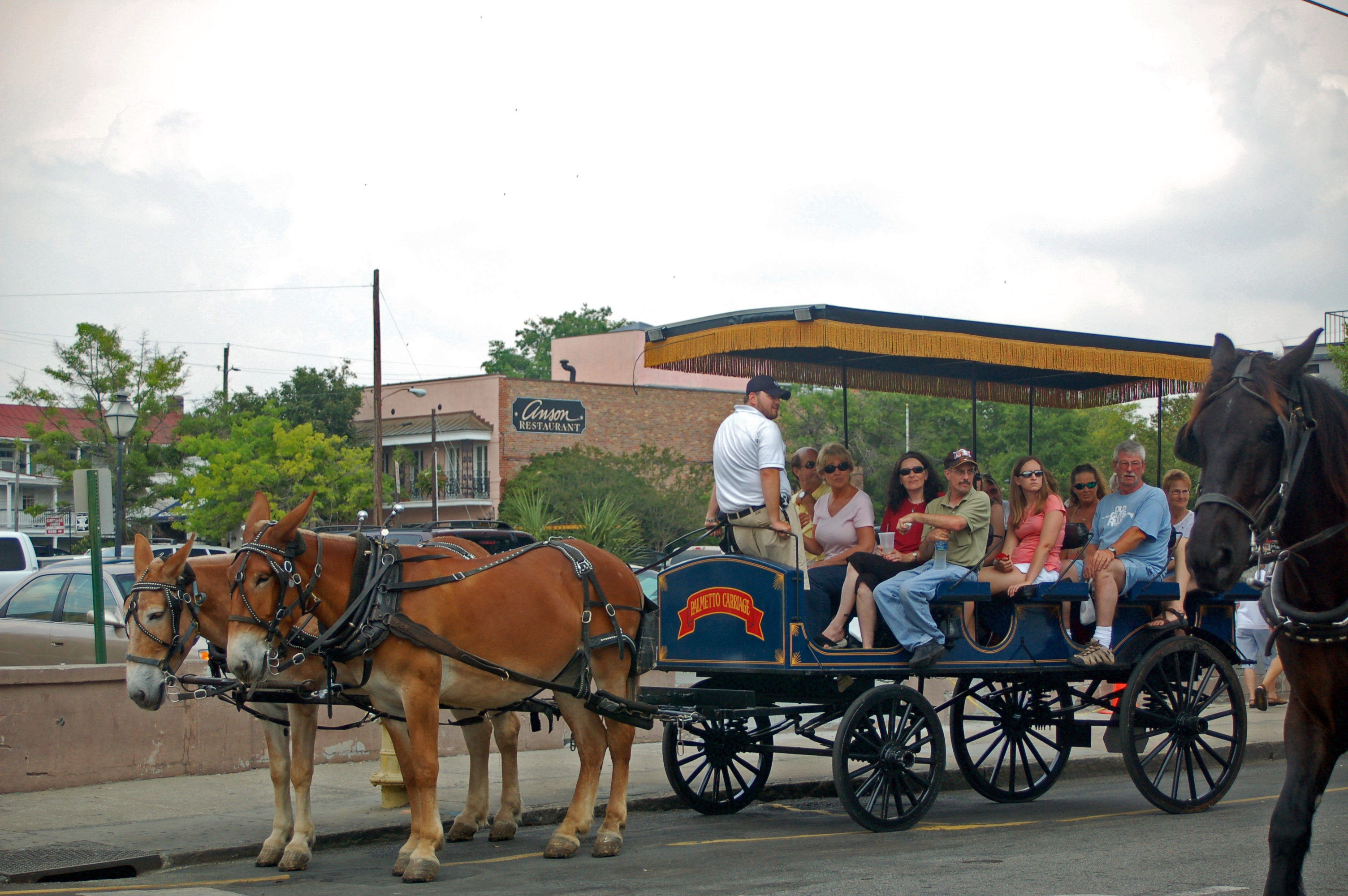
    Looking for a great place for dessert in downtown Charleston? Among the favorites of locals in Charleston are Kaminsky’s at 78 North Market Street and Peninsula Grill, 112 North Market Street. Kaminsky’s is rustic in charm, Southern in delicious desserts. Kaminsky’s prepares desserts fresh every day. The menu has specialty coffees and a variety of dessert martinis, including chocolate martinis. Order the local favorite, “Kamini’s,” a delicate sampling of homemade flavors, or order the carrot cake. If these just desserts do not tempt your taste buds, try the cheesecake. After shopping at the Market or on King Street, stop by Kaminsky’s to enjoy coffee and dessert while you watch the horse drawn carriages and pedestrians stroll along the popular Market area.

    Peninsula Grill and the Ultimate Coconut Cake

    Imagine a dream dessert of coconut cake complete with twelve layers of pure indulgence. Peninsula Grill’s specialty dessert the Ultimate Coconut Cake has been described as a ‘little piece of heaven,’ by the New York Times. Chef Robert Carter has made a name for himself and Peninsula Grill with his signature dish. Covered with coconut and vanilla, the Ultimate Coconut Cake has received accolades in several magazines. The cake consists of pound cake, laced with toasted coconut. The recipe for this award winning masterpiece dessert is one handed down from Executive Chef Robert Carter’s grandmother. Recognizing the cake was “one of the best layer cakes he ever tasted,” he refined the recipe, introduced it to the Peninsula Grill, and in 2003, offered it via Federal Express overnight delivery.

    Charleston Place Hotel and Charleston Grill

    Charleston Place Hotel is located in the heart of historic Charleston at 205 Meeting Street, within walking distance of Market and King Street shopping, art galleries and restaurants. Charleston Place was ranked one of the “Top 10 Hotels in North America.” Charleston Place has the architectural style of a 17th-century residence and the conveniences of modern life. The Italian marble lobby has a signature Georgian Open Arm staircase and a 12-foot crystal chandelier as the focal point.

    Located in Charleston Place is Charleston Grill, recipient of many accolades including Mobil Four-Star, AAA Four-Diamond and Distinguished Restaurants of North America. Chef Bob Waggoner joined the Charleston Grill in 1997. Nominated by the James Beard Foundation for Best Chef in the Southeast, he received an Emmy for his show, “Off the Menu.” His professional expertise and passion for food have contributed much to the success of Charleston Grill.

    The Buick Enclave and Charleston Stand Out

    Cruising in downtown Charleston, the Buick Enclave has sleek designs similar to the solid architectural design of Charleston. Architecture around the town is classic Georgian, Federal, Greek Revival, Italian, and Victorian. Gardens and courtyards compliment the stately homes South of Broad, the Battery and Rainbow Row. Driving the Enclave along Church and Meeting Street reveals the Colonial era. Many of the wrought iron gates in the city were designed by Philip Simmons, the ‘Charleston Gatekeeper,’ a world-renowned blacksmith and a Charlestonian.

    A daytime excursion in the quiet tuned cabin of the Buick Enclave should include a visit to America’s first museum, the Charleston Museum. Located at 360 Meeting Street, the museum preserves the history and culture of Charleston.

    Plan a day excursion to downtown Charleston in the Buick Enclave and visit the Aquarium, or take a ride to Fort Sumter. The South Carolina Aquarium is located at 100 Aquarium Wharf on the Charleston Harbor and a great place to learn about sharks, river otters, and the Sea Turtle Rescue Program. The Aquarium is a perfect site to take photographs of the Arthur Ravenel, Jr. Bridge and Patriots Point. The Arthur Ravenel Jr. Bridge towers above the Charleston skyline with a pedestrian and bicycle lane. Additional daytime excursions could include a visit to Magnolia Plantation and Gardens, Charlestowne Landing, Middleton Place, Boone Hall, Irvin House Vineyards, the Charleston Tea Plantation and so much more.

    Like Charleston, the Buick Enclave stands up to the challenge of a luxurious crossover. Delivering a ride that is poised and polished, it exemplifies an elegant, classic car. The Buick Enclave is one sweet automobile to drive. It could easily become a new form of hospitality for Charleston, the new breed of Southern Belles and everyone who appreciates the finer things in life.

    -30-

    Barbie Perkins-Cooper is a freelance writer who loves the journey and exploration of travel and health. She works full-time as an editorial photojournalist and has published numerous articles and photographs for regional, health and beauty and travel publications including the Travel Channel. Barbie resides in Charleston, South Carolina with her husband, Phil and three precious pups. She is the author of Condition of Limbo and Career Diary of a Photographer. Visit her website www.barbieperkinscooper.com

    IF YOU GO:

    Charleston Convention and Visitors Bureau, http://www.charlestoncvb.com/

    Charleston Grill, http://www.charlestongrill.com

    Charleston Museum, http://www.charlestonmuseum.org

    Charleston Place Hotel, http://www.charlestonplace.com

    Charlestowne Landing, http://www.charlestowne.org/

    French Quarter Inn, http://www.fqicharleston.com/

    Hominy Grill, http://hominygrill.com

    John Rutledge House Inn, http://www.johnrutledgehouseinn.com/

    Magnolia Plantation and Gardens, http://www.magnoliaplantation.com/

    Market Pavilion Hotel, http://www.marketpavilion.com/

    Peninsula Grill, http://www.peninsulagrill.com or http://www.coconutcakes.com

    Planters Inn, http://www.plantersinn.com/

    South Carolina Aquarium, http://www.scaquarium.org/

    Spoleto Festival USA, http://www.spoletousa.org

    cropped-arthur-ravenel-bridgeWentworth Mansion, http://www.wentworthmansion.com/

  • PARENT TO PARENT…CARE GIVING IN AMERICA


    IMG_0620_editedHolidays of 1997

    During the holidays of 1997, my life was extremely busy until a shocking reality forced me to readjust my schedule, to make time for a new, unsuspecting emergency when my father needed me the most, during his illness.  I was stepping into a new chapter of my life, green and naive of the responsibilities I would endure.  The roles of life were reversing, and before the Christmas holidays of 1997 ended, I learned about new duties while serving as the primary caregiver to my beloved, headstrong, and courageous father, Walter W. Perkins.
    On December 9, I sat alone at the hospital waiting for the results of an endoscopy, feeling confident my dad would be okay.  I flipped the pages of a magazine while waiting for the test results.  When his doctor approached, I realized from his body language and the look in his eyes he did not have good news to report.  When he whispered esophageal cancer, I screamed. Standing in the corridor of Roper Hospital, my entire body shook. This cannot be true. It must be a mistake. My dad is a tower of strength. Nothing gets him down. Nothing!
    Later, I regained my composure, while the hurtful words of cancer echoed in my head.  How could this be?  I pondered the diagnosis.  Dad would need chemotherapy and radiation.  I did not know if he would agree to the treatments, realizing that if he found the courage to fight such a dreadful cancer, he would become dreadfully sick.  According to the doctors, chemotherapy could help, or because it was so toxic and potent, it could kill him.
    The prognosis was not a positive forecast.  The oncologist estimated that he could live possibly six months; nevertheless, he was not able to retain food now and was malnourished.  He needed a feeding tube, to pump nutrition into his stomach.  If he did not respond and maintain food soon, he would probably be dead within two weeks from malnourishment.

    My heart palpitated as I realized my role model, mentor and advisor of life was terminally ill with a dreadful disease, and I was helpless to stop it.  My father was my guiding light of life, always strong and healthy.  Now, he would fight the battle of his life, and I did not doubt that I would be by his side for the duration of his illness.  Our roles in life were reversing, only this time, I would become the caregiver to my devoted, charming, and loving 82-year old father.

    I was not sure I was ready for this challenge, but I knew I would not allow him to fight the disease without me.  Although I failed to understand the correct definition of a primary caregiver, I would learn, and change my lifestyle schedule to be by his side.  Realizing the nightmarish roller coaster ride I was on was a wake-up call I hope never to experience again.

    I was a proud, energetic, fulfilled woman of the baby boomer generation, the generation designated to babies born during the years of 1946-1964.  I was involved in a demanding career, relieved that my son was grown and living on his own, planning to get married soon.  Now, it was time for me to do what I wanted to do until I realized my father would need me now, more than he needed anyone in his lifetime.  I was the parent to my parent.

    LIFE WAS SPINNING, OUT OF CONTROL
    I accepted the challenge, never understanding how the cycles of life were spinning uncontrollably while I slowly stepped into the dreadful middle age years, stepping into a new chapter of my life as a caregiver.
    Americans of the baby boomer generation are aging.  Approximately one of four American households are involved in some form of caregiving.  The number of primary care providers is diminishing because many family members live far away or cannot become involved. They work. They have careers. Demands. No time is left for cancer and caregiving.  Where does this leave the elderly?  Who will feed them, dress them, and provide for their needs and companionship?  Who will see that their medical, financial, and personal needs are met?

    In America, hospital and long-term care is skyrocketing.  Medicare will not cover the needs sufficiently.  Only a small amount of American families can afford private nursing home care or long-term medical care.  Approximately 36% of primary caregivers are over the age of 65.  As the baby boomers reach senior citizen status, the elderly population is projected to increase significantly and will require physical, emotional, assisted living and special needs.  Although the majority of caregivers are usually women, many of these women must juggle a full-time job and children still living at home, while managing the care of an elderly parent.  These demands can lead to physical ailments, including depression or burn out.
    I was under the impression that Medicare would take care of the medical needs of my father, along with the elderly.  I was sadly mistaken.  Medicare would not pay for his prescriptions unless he was hospitalized; and if he needed long-term care, Medicare would only cover twenty days.  Fighting for his life, Dad worried about the bills, along with how he would afford the expense of cancer.  He was encouraged to file for Medicaid.
    While the toxic brown bag of chemotherapy dripped into my father’s thinning veins, I realized I had to take charge of his life, at least for now.  Although I did not feel emotionally strong enough to endure the horrors of filing for Medicaid, I knew I had to become his voice, his nurse, and advocate.

    I made an appointment to file for Medicaid. The process to file is a three-hour process where the social worker asks questions dating back to my paternal grandparents and great-grandparents. Since my parents were divorced, I had to find the divorce papers and other documents proving that my father was not a wealthy man.


    LIFE WAS SPINNING LIKE A WHIRLPOOL
    I adjusted my schedule, missing weeks of work, along with months of sleep.  When I visited him, I smiled while struggling to camouflage my emotions.  Dad was so weak and nauseated from the chemotherapy, he failed to notice, and I was thankful.  I wore myself out physically, almost to the point of exhaustion.  My emotional life was spinning out of control, trapped in a whirlpool I could not escape.

    Returning to work after a nine-day absence, I had a meeting. During the meeting, I fell asleep, so exhausted I could not find the strength to work. I prayed for God to give me strength to survive.

    To my surprise, I found an inner strength within myself, focusing on my father’s medical, financial, and physical needs.  We developed a closer relationship, and although we never discussed how it felt for him to suffer a terminal disease, I still remember his poignant words to me during one hospital visit.  He reached for my hand, whispering, he said, “You know, Barbara, cancer is not contagious.”
    Tears filled my eyes as I turned my head away so he could not see me crying.  “I know, Dad.”  I kissed him on the lips, telling him I loved him.  I was proud to be his caregiver, and I was thankful he had confidence in me.

    Emotions were pouring out of me so I rushed to the arboretum at Roper Hospital. Opening the door, I discovered no one was around. I sat down, wiping the gushing ocean of tears from my face. I rushed to the balcony. Opening the doorway, I closed it and started screaming. At first, just a whimper of screams. Listening to the traffic along Calhoun Street, I realized no one could hear me, so I let the fears, tears, and heartache of Dad’s illness escape. Afterwards, I realized I felt better.

    PRIMARY CAREGIVER SUGGESTIONS
    If you serve as a primary caregiver, be good to yourself.  Find time to be alone, while juggling the demands of caregiving, even if it means you must close the door for a bit of privacy for only a few minutes.  Make the most of your days, especially while caring for your loved one.  Take charge of your life.  Do not feed the doubts, or listen to the negative aspects of your new lifestyle change.  Repeat to yourself that you are taking life one day at a time, and make the most of every day, even if it is a dark and dreary day.  Be thankful for your blessings and the days that you and your loved are sharing.
    Learn to speak up and fight for your rights, and the rights of the terminally ill, or elderly person you are caring for.  Watch for signs of depression, in yourself and your loved one.  Some of the symptoms of depression include: inability to sleep, inability to concentrate, and a mind that constantly races, especially at night, sometimes referred to as circular thinking, lack of appetite, irrational behavior, crying, or irritability.  I was in denial of my emotions, unable to see the warning signs.

    DYING WITH DIGNITY
    While serving as a primary caregiver, encourage your loved one to be strong, to fight for life, and to be courageous.  Let the person you care for make some of the decisions.  Most of all, open your heart, your mind, and share your love.  Never leave your loved one without a touch of affection and the simple words I love you, because you may not have tomorrow to express those affections.  Discover the rights of the elderly.  And when the time comes, allow your loved one to die with dignity, if that is his or her wish.
    Search on the Internet for caregiving issues, publications, and become an advocate about elderly care.  I found numerous websites, and I read them passionately late at night, when I could not sleep.  Stand up for your rights, trust your instincts, and support your loved one’s wishes.  Make the most of every day, without making excuses for mistakes you make, appointments you must cancel, or demands you can no longer meet.  Become familiar with the Family Medical Leave Act, and do not allow others, especially co-workers or a boss, to intimidate you.

    After I missed so many days of work, my boss met with me, wanting to know why I wasn’t dedicating myself to work anymore. Suddenly it seemed I was not efficient at my job and I appeared not to be dedicated to working so many hours, including weekends. I cannot give my all right now, I said. My priorities are my family, not my job.

    One month later, I resigned, taking another job with ‘flexible’ hours and compassion for my situation.
    Walter W. Perkins died on July 6, 1999, and although I am no longer a caregiver, I still consider myself an advocate for elderly care, especially where the rights of residents of nursing homes are concerned.

    During the many nights I failed to sleep, I wrote CONDITION OF LIMBO,” a memoir based on the stressful experience of serving as a caregiver, and the lack of assistance for terminal illnesses. Published in 2001, the book discusses many of the issues my father and I experienced while he desired to die with dignity.

    NO ISN’T AN OPTION

    During Dad’s illness, I never took no for an answer, and I learned everything I could about Medicare, Medicaid and the rights of the elderly.  I wanted to be the voice my father could not be because he was so gravely ill and frail.  I have no regrets, and I am proud to say my father was my top priority in life, during his illness, and residency in a nursing home.  Although he died while I was walking into his room for my daily visit, I know that he knew I loved him, and I was devoted to him.  He was my life, and now he is my shining star.  A few days before he died, he reminded me to make the most of every day of my life, and I still strive to live life to its fullest, remembering his wisdom, his love, along with the passions he held for others.

    LIFE AS A CAREGIVER

    You, as a caregiver, or a baby boomer, could be the next family member to walk into a nursing home or a hospital, while your loved one is dying.  Live for the moment, hoping to see the sunrise and sunset of a new tomorrow.  Never forget to share your love and special times with the terminally ill or elderly.

    After the death of my father, I fell apart.  As I dug my way out of the darkness of despair, I realized I was lost in a world of depression, unable to confront my emotional well being.  It was my darkest moment.  I managed to join a grief therapy session, while I learned to accept his death.

    WAKE-UP CALL

    Watching my father battle the debilitating disease of esophageal cancer, as he struggled to maintain his dignity, gave me a wake-up call I will never forget.  Now, I make the time to search for flowers, rainbows, birds and butterflies  and I enjoy the little things in life while enjoying life’s effervescent sunrises and sunsets.

    PROUD TO SERVE

    Be proud to be a caregiver, while serving as a parent to your parent, and never look back!  Life is too short to be trapped into a spider web of despair and regrets.  We must remember to make the best out of a problematic situation, feeding the decisive moments, while forgetting the negative and hopeless feelings we as caregivers experience.  We must educate ourselves about caregiving.  We must trust our instincts, and know that what we are doing is not a sacrifice, but an act of unconditional love while we learn to adjust and place our needs aside.  We are sharing and teaching, and growing into the citizens and family members that we need and desire to be.  We must stand up, not only for our rights but also for the rights of those who we love during their hour of need.  With the support of our families, friends and other caregivers, we are building memories to cherish for the rest of our lives.
    May God bless caregivers, the family members, and loved ones we care for; and may we as caregivers continue to find ways to improve the lives of the ones we love and want to remember — one day at a time!


  • Chattahoochee Child – Excerpt


    Dearest Readers:

    Posting a bit of the story I’ve had dancing inside my heart and soul for many years. Too many years to mention. Yesterday, I realized I have to let go and write this. I hope you enjoy.


    Yesterday, my husband and I went to the theatre to see “I CAN ONLY IMAGINE.” Based on the song, “I CAN ONLY IMAGINE,” recorded by Mercy Me in 1999, I remembered when I first heard this song and how the lyrics affected me. My dad passed away in July, 1999. I was in such a severe depression after losing him, I prayed to die, realizing I was being selfish. I still had life to live. People to care for and love. Visiting with my doctor, she asked if I was suicidal. I laughed, realizing she knew me better than I knew myself.
    How can a song affect someone so passionately? Writing this question out, I recognized I failed to have an answer. Kneeling at my special window, I looked up into the Heavens and prayed, only this time, my prayer was different. I asked God to help me live and to learn to forgive.
    My mother and I were alienated since 1988. After my high school class reunion, I discovered my mother told our little boy his mother was a whore and a drunk. The morning after the reunion, little Michael David rushed to me asking me what was a whore. “I know what a drunk is since Grandpa in Charleston is a drunk, but I’ve never heard the word whore. What is it, Mommy?”

    I scooped his tiny body into my arms and bear hugged him. “Mommy is not a whore. A whore is someone who goes out with other men and sleeps in the bed with them. I’m not a whore, Michael David.”

    “Granny called you a whore. But you only sleep in the bed with my daddy, Mommy.”

    “It’s not a nice name and it’s a word you should not speak again, at least until you’re grown.”

    “Why would she call you that word?”

    “Granny doesn’t love Mommy the way you and Daddy love me. That’s a good question, and I will ask her in a minute. You go back to sleep.” I kissed Michael on the cheek, tucking him in with his father. I slipped on my robe, walking toward my mother’s room.

    I knocked three times. She opened her eyes. “Why did you call me a whore?” I shouted.

    “I did no such a thing.”

    “Yes, you did.” Michael stood next to me. “You said my mommy was a whore and a drunk.”

    The argument continued for an hour. Garrett awoke to the shouting. Recognizing this conversation would be an eternal shouting match of two stubborn women who butted heads all the time, he said we were leaving. I grabbed our luggage and stormed out of the house, refusing to look back.

    I cried an endless ocean of tears from Columbus, Georgia to Charleston, South Carolina. Michael David apologized for starting the argument. I responded that he was not the problem. My life as a child of the Chattahoochee, the daughter of a woman who could not show love at all, was the problem. The only solution was to build my life with my family, Garrett, and Michael.

    In 1988, I realized home is where the heart is. My heart was in Charleston, not Bibb City, or the Chattahoochee. My life in Charleston was filled with suburban roots, and a solid brick foundation, not a detour route of housing projects, mill villages, shouting matches and nothing to refer to as home. The windows to my world reflected love, pride, and ambition. I pinched myself to bring myself back to reality. I did not wish to remember the annoying disconnections I shared with my mother, nor did I want to walk in her footsteps.

    I lost my mother on September 11, 2002. She died a ‘questionable death,’ after battling to survive a stroke. Since that time, I’ve discovered she choked to death by inhaling nuts. My mother was allergic to nuts. Her body was paralyzed on the right side. How she was able to inhale nuts and choke to death is a question I need answering. When my sister phoned me telling me of her passing, the one question she repeated to me was: Do you think they’ll do an autopsy?

    Interesting question I failed to understand since I was ill with acute bronchial asthma at the time and failed to comprehend what my sister was asking.

    Do you think they’ll do an autopsy? Interesting question…

    I can only imagine!DSC_0061
     

  • Weight Watchers Is Not a Diet – It’s A Community of People…


    Dearest Readers:

    This will probably be a short posting about something we learned at the Weight Watchers meeting Thursday, March 8, 2017. Two of my closest friends in Charleston are Tammy and Sara. Neither were at the meeting on Thursday…Just me, my shadow and other friends I’ve met thru Weight Watchers. Tammy moved to Florida a few months ago. How I miss her. Sara is out of town. We are keeping in touch and I need to send Tammy a text – something we do lately on Thursdays.

    On Thursday, I lost .06 pounds. I’ll take it, I said – finally happy to be losing again. I hit plateaus that seem to last FOREVER. My goal was to lose 15 pounds by my class reunion in May. Since I lose so slowly, I do not believe I’ll achieve that goal, so now, I’m saying I’d love to lose five pounds by May. I’m hopeful the dress I bought two years ago will fit. I’ll let you know about that goal IF I wear it to the reunion. More on that – Later!

    Looking around our meeting room at Weight Watchers I realized I joined this amazing group of ladies, and a few men, seven years ago. Back then, I wanted to achieve my ‘goal weight’ that year. Believe me, I’m still struggling to achieve that goal weight — WHATEVER the goal weight is for me. No one has mentioned I should weigh this ___, or I should weigh that ___! I realized it is up to me, and maybe my doctor, to select my goal weight; nevertheless, If (and WHEN) I reach that number, I will weigh less than I weighed in high school. I confess, during the four years of high school, I attended six high schools!  No, I wasn’t the kind of student to be kicked out of school. Changing high schools so many times was simply because my parents moved us as a family, and when I was 15, my parents separated and divorced, so we moved to Columbus, GA – to a mill village.

    Needless to say, my teenage life was a life filled with stress, the inability to make friends, and many unpredictable situations I’ve written about on this blog. Fortunately, I graduated from high school and now, I’m happy to have a fulfilled life in Charleston, SC.

    As mentioned, losing weight is not an easy task for me. Now, I’m back to working out and using the Freestyle of Weight Watchers.

    During our meeting on Thursday, someone mentioned that Weight Watchers IS NOT A DIET…IT’S A COMMUNITY! How interesting and true that statement is. We have ladies (and a few men) wanting to lose weight. One special lady has been ‘lifetime since she was 17!’ She’s had many setbacks, but to look at her now, she is beautiful, slim and such an inspiration, especially to me. Other women have fought and struggled many times. Just like ME! Nevertheless, all of these Weight Watchers admitted they could not lose weight alone. They had to attend meetings! They had to face the scale once weekly, and they had to keep attending meetings. So like me! A beautiful lady sitting next to me stated she had her son’s wedding coming up so she understood my goal of ‘knocking ’em dead.’

    I must confess, in high school I was a wallflower. My parents were divorcing. We lived with our maternal grandparents in a two-bedroom mill village house – with one bathroom. No washer, or dryer. No air conditioning. Simply a TINY house of brick and mortar. I did not make many friends in high school, nor did I date high school guys! Why would I? If I did, we as a family would pack up and move again. We lived like gypsies. Never having a home that would build me into the woman I am today. When I go back to my ‘home town’ I do not have any roots to remember. NOTHING. I thank God I survived and didn’t end up as a child with many problems. I credit that reality to my stubbornness, determination and independence and attending church regularly!

    The one indiscretion I did have, and still have is the hunger for food. My grandmother made the most fluffy and delicious homemade biscuits ever. They seemed to just melt in my mouth and each time she made them, I ate my share. After my husband’s heart surgery in 1998, I changed the way I cooked, learning to cook healthier. Fortunately, I never learned to make Grandma’s homemade biscuits. Each time I tried, my husband called them hockey pucks. I do believe his description is correct!

    My friends still ask me, “Are you STILL doing Weight Watchers?”

    Yes. I’m still doing Weight Watchers and when I reach Lifetime, I will continue attending the meetings on each Thursday. I remind myself: This I do for ME! Nothing interrupts my Thursday meetings. I will miss my meeting when we go to my class reunion, but the next week I’ll get back on that scale again, still seeking “Lifetime!”

    After all – for me, Weight Watchers IS A COMMUNITY. A community of encouraging women (and a few men) — haven’t I said that before? Even if we, as a community, have only five, 10, 20, 30, 40 or even 50 pounds to lose, together we can do this. I have anchors I use to remind me to continue. One of my anchors is a poem I repeat daily:

    “It’s when things seem worse, you mustn’t quit,” and I say: “This too shall pass,” whenever I gain. I’ve learned not to beat myself up when I am not successful, and I keep reminding myself that Weight Watchers is what I do for me. No one else. No, I’m not working out daily and doing my best to lose weight for my husband, family, or shame. I am doing this for me. I look in the mirror daily. I wear makeup – DAILY. I style my hair – DAILY and now, I do my best to be accountable and to accept whenever I gain, or lose only “.06 of a pound.” A loss is a loss, I tell myself. Together, as a community WE can do this!

    After all, Weight Watchers IS my life now! Next Thursday, I’ll be at the meetings. And the next….and the NEXT….continuing my journey to lose my weight, and to look the best that I can look at the class reunion and beyond!

    Yes, I’m vain. I want to look the best I can look – for eternity and ‘beyond!’DSC_0061


  • Remembering Sir Shakespeare Hemingway


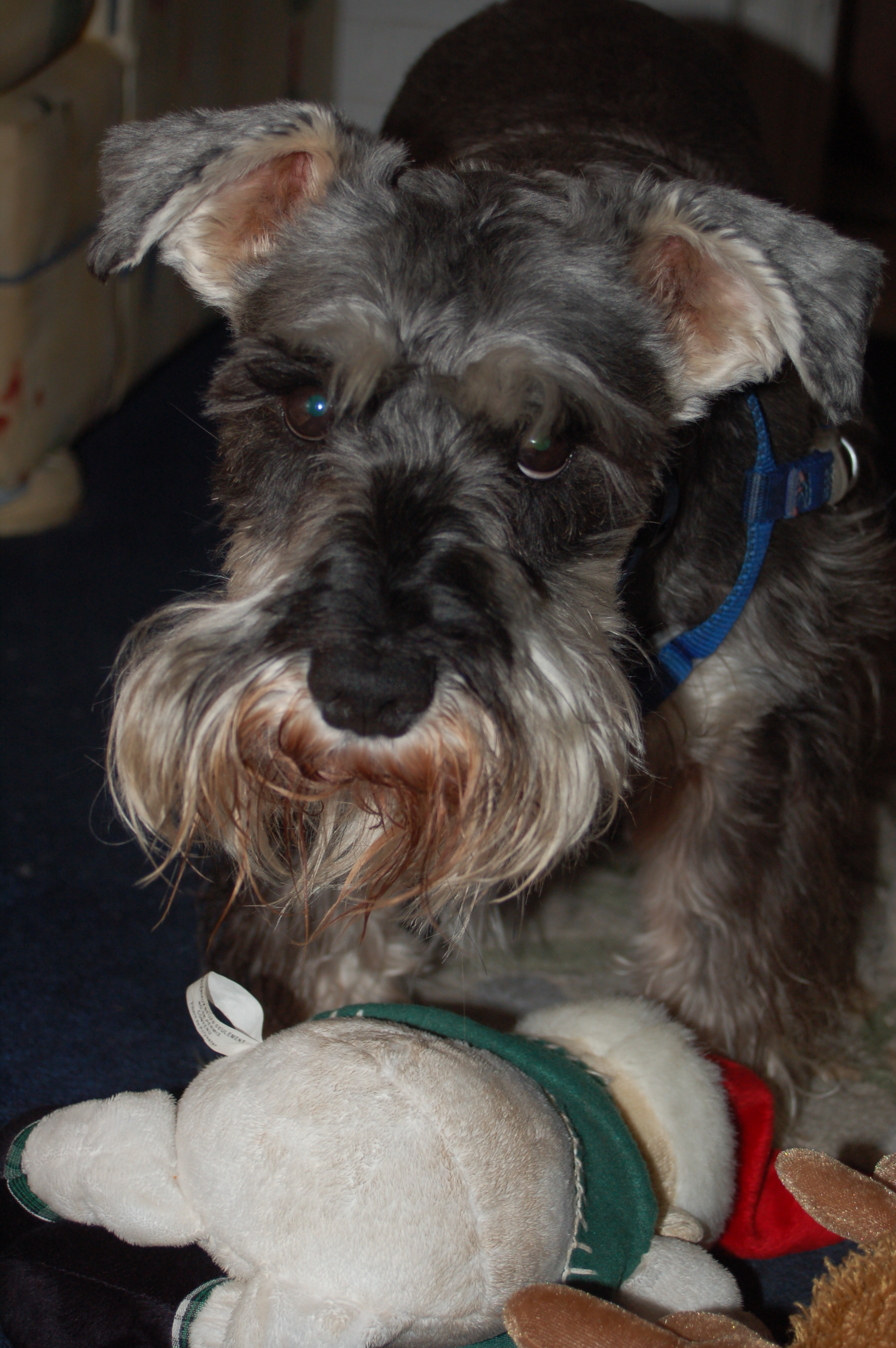
    035Today, March 7, 2018 is an extremely sad day for me. Today is the first anniversary of losing my precious mini-schnauzer, Sir Shakespeare Hemingway. Exactly one year later, I am still heartbroken over losing him. Over making the decision to allow him to go to Heaven so he would not suffer any longer.

    On the morning of his loss, when he struggled to walk outside, his rear legs gave out on him again. Those precious little energized legs split apart. He fell down and looked at me, as if to say, “It’s time. I’m tired. I’m weak. I’m sick. Mommy, please do something so I will not ache anymore.” His legs were so weak he could not lift them like most male dogs do when they potty. He was pitiful, deteriorating right in front of my eyes.

    Sir Shakespeare was born on April 11, 2003. On April 12, 2003, I met him. There were three newborn puppies. The female was promised to someone else. I touched both male puppies gently, rubbing their ears. Little Shakespeare, the “piglet” responded with a slight moan and I knew he was the pup we wanted. He fit into my hands and I kissed him on the nose while whispering his name: Sir Shakespeare Hemingway. We visited him weekly and when he was six weeks old, I was told he could go home with us. I wrapped him in a blue blanket and we brought him home. Little Shake n’ Bake squirmed from my lap onto my chest, and there he rested until we arrived home.

    Independent. Affectionate, and a unique personality – that was Shakespeare. We communicated. He slept with me, always wanting to rest on my hip – touching me. Always. He did not like it if I asked him to please move over. He responded by scooting his little body over, grumbling the entire way. In the morning, he would climb on top of me. If I didn’t respond, he reached out with his left paw to touch me and awaken me. His eyes stared deeply into mine. I kissed his nose.

    When I was sick with acute bronchial asthma, Shakespeare followed me around like a shadow. He would kiss me once, then he crawled onto my chest, sniffed at my nose and mouth and refused to move. He was my nurse, caring for me while he listened to the wheezing in my chest. He would not move away from me, even if I asked him to. He simply stared into my eyes, as if to say: “I’m taking care of you. You’re sick. You need me.” He fell asleep on my chest and when I awoke, he was there. My nurse. My loving, caring little Shakespeare.

    Over the years together, we walked daily, until Shamus died. Shakespeare would lead us. Occasionally, he stopped to smell a flower, or to feel the fresh breeze blowing in his ears. Sometimes he would pick up a stick and carry it while walking. He had a phobia of darkness if he was alone. On one night my husband and I got home a bit late. The breakfast room was dark. Shakespeare and our other pups slept in this room if we were not home. On this night, when Shake n’ Bake heard the car, he was barking a loud and vicious bark. When we walked into the room, he jumped on my leg, still barking. He was reminding me that he was in the dark and he was frightened. Don’t ever leave me in the dark again. You know I hate being alone in the dark.

    The next morning, I placed a lamp on a table in the room, turned the light on and never left it off. Shakespeare would not be in the dark again.

    As he grew older, his appetite grew. He would eat his food and if another of our precious little friends hadn’t finished their food, he would attempt to move them over so he could eat again. During his yearly wellness check-up when he was 10-years-old, the vet suggested giving him green beans and less food. Shakespeare lost weight, weighing in at 24 pounds, losing six pounds.

    In September, 2016, after grooming, I noticed Shakespeare was still losing weight. Occasionally, he turned away from his food and wouldn’t eat. I struggled to feed him from my hands. He wasn’t hungry. His legs began to give away and when he went outside, he would move to a corner of the back yard, ignoring me asking him to come inside. His hearing wasn’t as good as when he was younger. I noticed if I clapped my hands three times, paused and clapped three more times, while shouting “Come here, Shakespeare” after a few minutes, he would get up and move slowly towards the door.

    Although I could see Shakespeare fading away, I refused to accept it. I wanted him to fight. I cradled him in my arms, telling him I loved him and I wanted him to fight. He responded by licking my face, jumping from my arms, and when his feet hit the carpeted floor, he whined.

    Our nightly ritual of cuddling in the chair no longer happened unless I picked him up, and when I reached to pick him up to cuddle with me, he wiggled, moving his back legs like spaghetti. He was in pain.

    The vet said he was getting older. He reminded me that most schnauzers have a lifespan of about 14 years. Shakespeare was 13. He would be 14 in April. I wasn’t ready to lose him.

    Over the next six months of his life, Shakespeare wanted to go outside less, and when he did go outside, he squatted. He could not lift those painful rear legs like most boys do. He would look in my direction, as if he was saying, “Don’t watch me. Don’t watch me fading away from you.”

    In December, Shakespeare could not hold his bladder. He would urinate on the floor in the breakfast room. Sometimes he would do other business there. We placed puppy papers on the floor nightly since he was sleeping there now. I let him know I was not upset with him. I understood. His body was getting older and he was fading away. He licked my face to let me know he understood and he loved me.

    On March 7, 2017, we made the decision to have the vet check him over and see if it was time to let him go. Our vet knows how much we love our animals. After examining Shakespeare, he looked at me with tears streaming down my face he said: “You’re making the right decision.”

    I held Shakespeare in my arms. I told him it was time to see Shamus again. He lifted his left paw, touching me, and he kissed me one last time.

    My arms were holding him as he went to sleep. The vet gave us a few more minutes together, then he asked if we were ready. Since Shakespeare was sleeping, I nodded. I heard Shakespeare’s last breath, and he was gone.

    How I wanted to bring him back, but I knew he was suffering, weighing only 17.6 pounds on this date. He was so tiny now it was easy to pick him up. After losing him, guilt almost tore my heart out. I questioned everything while realizing we did the most humane thing by letting him go. I did not want him to die alone in the house with only his brothers around, nor did I want him to die in darkness.

    I prayed that God would welcome him into the gates of Heaven and let him find Shamus so he would not be alone. I reminded God that Shakespeare did not like the dark, and I prayed for a sign to let me know he was ok and happy.

    A few days later, I found a fly inside the house, flying around my desk. I was writing at the time so I did not pay attention to the fly until I found it floating inside my coffee cup.

    “Shakespeare!” I cried. “You’re here. You’re letting me know you are OK.”

    Through blinding tears, I smiled, remembering how Shakespeare detested when anything got in the water bowls, especially IF it was a fly. He would sit while taking his front paws, moving them into the water, attempting to remove the fly. After a few minutes, he would bark – his demanding little bark. He refused to drink any dirty water, or water that contained a fly.

    Staring at the fly floating in my coffee cup, I picked it up, poured it out and washed the cup, while remembering my precious, silly, demanding Sir Shakespeare Hemingway.

    A few nights later, I had a dream. Shakespeare was sitting on a hillside with the greenest pastures I’ve ever seen in life or while dreaming. He barked and wiggled and barked once more. In the brightness of the lights of Heaven, Shakespeare barked one more time, then he turned to run away while looking in my direction. Yes, Sir Shakespeare Hemingway Cooper was in Heaven, playing with Prince Marmaduke Shamus Cooper. Little Shake n’ Bake and Shamey-Pooh were together again.

    Yes, today is a sad day for me. A day of remembrance and so much everlasting love.

    1393110-R3-013-5

  • THE ROLE OF A WRITER


    A writer’s life is a life filled with intrigue, creativity, influence, and curiosity. Writers are famous for being temperamental and are typecast as being extremely difficult to live with, especially when the virus of writer’s block threatens the train of thought. Some writers are college graduates; some are simply graduates of the hard roads of life, or the school of hard knocks.

    To qualify for this invigorating, somewhat excruciating lifestyle, a person needs to have the will and determination to accept rejections, the perseverance to try again, and the strength to survive whenever the chips are down.

    The writer must be able to express him or herself in a manner that is confident and easily understood. A writer is a communicator. He needs to feel comfortable sharing human experiences. He must be expressive and able to let others share his pain, or his joy. Knowledge of the English language, sentence structures, composition, and how to organize thoughts in a comprehensive order is imperative. The writer must pay close attention to details, characterizations, and life. He has the ability to express what others can only feel, with a passion and sensitivity that can touch hearts and change lives.

    Many writers share a knowledge and intense hunger for deep feelings and an endless curiosity about the world and the people that surround it. Writers are creative, dramatic, and resourceful. They understand words and the power behind those words. Writers have a never-ending hunger for life.

    Overall, the writer is a person who is determined to explore and create. He is most happy when the words flow without a struggle. He is committed and establishes goals for himself. Some of those goals seem impossible to reach, but when they are reached, the rewards are worth the struggles and pain of rejection.


    ***

  • Detecting Esophageal Cancer


    Dearest Readers:

    The diagnosis rings in your ears. Esophageal cancer. A thousand thoughts and questions race inside your mind and you find it difficult to cope, think or relax. You want a second opinion. You want to live and you want things to be the way they were, before your quality of life was questionable due to cancer.

    Tuesday, December 9, 1997 was the day I became an advocate for esophageal cancer. The endoscopy revealed a tumor, located in the esophagus. A malignant tumor…Cancer…the dreaded word echoed inside my brain. No! I screamed! It cannot be cancer! There must be some mistake! My father took such good care of himself, but like lots of men from his generation, he refused yearly exams and only went to the doctor when he was ill.

    Symptoms of Esophageal Cancer

    Esophageal cancer is a difficult cancer to detect. Many of the symptoms, such as coughing, difficulty swallowing {dysphagia), and indigestion are thought to be acid reflux. Esophageal cancer may start as tightness in the throat or pain in the chest. Recurring hiccups, hoarseness, difficulty swallowing, or regurgitating food and weight loss, could be symptoms of cancer of the esophagus. Until my father’s diagnosis, I was clueless of the disease. Now, I serve as an advocate, to educate others, and to prepare families about this debilitating disease that attacks profusely, steals dignity and quality of life and can kill. I describe esophageal cancer as the silent cancer.

    Diagnosis

    The symptoms of esophageal cancer rarely appear until the advanced stages of the disease. Unlike early detection of breast cancer and other forms of the disease, cancer of the esophagus is not able to detect by early screening. While it is recommended by the American Cancer Society to get regular physicals, eat a proper and healthy diet, quit smoking, if you are a smoker, and to maintain a healthy weight, esophageal cancer is a silent cancer that creeps up only after it advances. The major complaint from someone diagnosed with the disease is the inability to swallow or retain food. Social activities with friends and quality of life become a major issue.

    Treatments for Esophageal Cancer

    Cancer of the esophagus is a treatable disease in many cases, including surgery, chemotherapy and radiation and clinical trials. If surgery is an option, the procedure could relieve the excruciating symptoms and improve the quality of life for the patient. If surgery is not an option and quality of life is threatened, due to the inability to swallow or retain nutrition, the doctor may prescribe a PEG tube.

    The Percutaneous Endoscopic Gastrostomy (PEG tube) is a form of life support for patients who are having difficulty with swallowing, or eating. Insertion of the PEG into the stomach is performed by an endoscopic procedure. With the PEG tube in place, liquid nutrition, along with medications, may be administered directly through the feeding tube, into the stomach. Introduced in 1979, the PEG tube has been used for an estimated 200,000 patients, serving as a form of nutritional support.

    At the age of 84, Walter W. Perkins fought the battle of his life. His prognosis was not a good one. On two occasions, I prayed for a miracle to happen when he was near death, and on those two occasions, the miracle was granted. The doctors said he might live six months, if chemo and radiation therapy were successful. He beat their odds, battling this disease for nineteen months with stiff determination, faith, and positive thoughts guiding his way. Due to the location of his tumor, surgery was not an option for us. A few days after his diagnosis, he permitted the doctors to connect the PEG tube to his frail body. Furious that he could not swallow without regurgitating his food, he called his feeding tube an umbilical cord. His quality of life decreased at a rapid rate after his diagnosis of esophageal cancer. Fortunately, the PEG tube provided him the ability to regain some of his weight, extending his life until he became despondent and demanded to eat food again. His doctor consulted with me, letting me know that if he insisted on eating, he would aspirate his food and choke to death. For us, it was a quality of life issue. I did not fight the battle to override his decision to enjoy food again, even though I knew eating food would lead to his death. On July 6, 1999, while I was entering the nursing home for my daily visit, my father aspirated his food and was gone.

    Before his diagnosis, I was naïve to the prognosis of esophageal cancer. This disease was not marketed or publicized whenever I read stories about cancer, and I called it the silent cancer, because it silently develops without many warning signs. When I expressed my guilt to the oncologist, I was told that esophageal cancer is increasing and is quickly becoming one of the fastest growing cancers in the world.

    Additional treatments are based upon the type of esophageal cancer, location of tumors, and how capable the patient is to respond to treatment. In my father’s case, his age, fragile condition and the location of his tumor dictated his treatment of chemo and radiation therapy. After his second dosage of chemo, his treatment with chemicals and radiation were cancelled. The drugs had left him so weak we almost lost him. The chemotherapy had drained every ounce of strength he had. From this point on, the only treatment would be for the quality of his life.

    Photodynamic Therapy (PDT)

    A new method of treatment for cancer of the esophagus is photodynamic therapy. PDT is helpful in some cases by injecting chemicals into the blood. Laser lights target the cancer by an endoscope procedure. A minor disadvantage of PDT is the light may only reach cells on the surface, and cancers that have spread are not treated.


    Survival Rate

    According to the American Cancer Society, the survival rate of esophageal cancer is low. New cases are increasing at a rapid rate. It is estimated that in 2008, approximately 16,470 patients will be diagnosed with cancer of the esophagus. Deaths are predicted to total 14,280. The Five Year Survival Rate is estimated to be only 34%. These statistics are not encouraging; however, with developments of clinical trials, drug therapies and the willingness to fight the battle of cancer, I am hopeful the statistics will increase soon.


    Quality of Life

    All types of cancer create issues with the quality of life for the patient and family. Esophageal cancer certainly affects the quality of all. The American Cancer Society identifies four basic quality of life factors, including social, psychological, physical, and spiritual. Watching my father fighting esophageal cancer, I would like to add one more quality of life issue, the quality, and loss of independence. Before my father’s diagnosis, I watched an amazing independent man walking in his shoes. He lived alone in a retirement community and at the age of 83, he took daily strolls, cooked his meals, gardened occasionally and he enjoyed singing. After the diagnosis and the PEG tube insertion, he was observed by medical professionals to need skilled care – a term I became most familiar with as his advocate. Skilled care was a medical term that meant he needed the daily care of a registered nurse. His social life consisted of a roommate in the nursing home and the staff of medical professionals caring for him. He was too weak to go anywhere most of the time, and when he was able to go out with me, I had to be careful not to take him to restaurants or out for ice cream since he was receiving liquid feedings from the PEG tube and he could not swallow. His physical activity was non-existent because he was so frail. All that remained was the spiritual quality of life. Before his death, my father tapped into the spiritual side of his life, reading the Bible constantly, quoting verses, and singing religious songs, aloud. Before his death, the singing quieted. He coughed constantly and would lose his breath from the coughing attacks. In a whispering voice, he reminded me he was ready to go, if the good Lord decided it was his time. I noticed his voice was still hoarse and his eyes did not hold their usual sparkle.

    Additional research for Esophageal Cancer is underway and I am hopeful that in time there will be a cure for all cancers. Cancer Aid Research, education, and advocacy serve as strong components to understand cancer. Esophageal cancer is usually diagnosed in the late stages of cancer, as was the case with my father. When I inquired about the stage, I was told he was in Stage Four. The outlook for this disease is not a good one. The survival rate is low. If you are a smoker, quit. If you have symptoms such as unexplained weight loss, pain or difficulty swallowing, hoarseness, non-stop coughing, heartburn, or hiccups, make an appointment with your doctor and ask about esophageal cancer. If you are at high risk, the doctor might suggest an endoscopy.


    Serving as my father’s caregiver gave me a new perspective on life and the belief in miracles. Now I appreciate the beauty of a new morning sunrise and I can look towards the future while doing all that I can to educate others about esophageal cancer and care giving. The experience of watching my father suffer so much, still with a smile on his face, even when he was angry and in denial about his cancer taught me so much. He encouraged me to move forward with life. I have chosen my life’s direction, or perhaps it chose me, and I will do all that I can to become an advocate for those who battle this dreadful disease. My passion is one of hope so cancer will soon become a curable disease that is not silent. I still believe in miracles.


    Sources:


    Barbie Perkins-Cooper is a freelance writer who loves the journey and exploration of travel and health. She works full-time as an editorial photojournalist and has published numerous articles and photographs for regional, health and beauty and travel publications including the Travel Channel. She is the author of Condition of Limbo and Career Diary of a Photographer. Visit her website www.barbieperkinscooper.com


  • MOBILE, ALABAMA CITY BY THE BAY WHERE THE MARDI GRAS BEGAN


    Described as “one of the top 50 places to live and play,” according to National Geographic Traveler, Mobile, Alabama is a city filled with hospitality and rich Southern charm. Known for the first Mardi Gras celebration back in 1703, and promoted as “America’s Family Mardi Gras,” Mobile is a special city where the entire community is proud to service and welcome tourists, guests and convention and meeting professionals. “Mobile Bay offers a genuine southern experience in a historic, yet vibrant coastal setting. A top-rated, riverfront convention center anchors a lively, walkable downtown offering world-class accommodations, lush parks and squares, retail shops, restaurants, museums and art galleries,” said Stacy Hamilton, Vice President of Marketing and Communications at the Mobile Bay Convention & Visitors Bureau.

    “This 300-year-old port city is one of the oldest and largest along the Gulf Coast. The Hank Aaron Museum (Aaron’s boyhood home) moved to the Hank Aaron Stadium and is now open for meetings, receptions and tours. The character, architecture, passion and charm complement this fine Southern city by the bay, making Mobile a historical beauty to behold. Mobile Bay offers a lively arts and entertainment district, architecturally significant homes and buildings, beautiful gardens, parks and outdoor spaces, along with fresh local seafood, making it the ideal meeting destination,” said Hamilton. “The Carnival Elation, championship golf, a variety of water activities, one-of-a-kind event venues, city-wide historic tours, and a gracious hospitality community are sure to make your next meeting in Mobile a memorable one.”

    The Carnival Elation arrived in Mobile in May 2010, replacing the Fantasy. Elation accommodates 2,000 passengers, offering four, five, and seven-day cruises from the Port of Mobile. “Pre and post-convention vacations are popular options for meeting delegates,” said Hamilton. “Candlewood Suites, an all-suite hotel will be located in downtown Mobile in December 2010. The entire Mobile Bay area offers an easy and efficient hotel and convention center package, with 1,100 hotels rooms within easy walking distance of the convention center, as well as wonderful attractions, restaurants, and nightlife nearby. The best value months to book are July and August, with room rates typically at a 30% discount. The average group rate for the City of Mobile is approximately $75.”

    “Mobile has a little bit of everything. Those searching for the center of the social scene will enjoy the downtown area, while others will enjoy an artistic journey only a few miles away and across the Bay in the quaint Town of Fairhope,” said Kevin Hellmich, Senior Vice President of Sales for Renaissance Mobile Riverview Plaza Hotel. “Visitors can enjoy the beach, the pool and spa, or play golf on some of the world’s most challenging golf courses, tour historical monuments or get lost in the harmony of beautiful Bellingrath Gardens. Southern charm and hospitality is a specialty in Mobile where the entire community participates.”


    ADDITIONAL HOTEL VENUES

    Located on Highway 90 West is the Holiday Inn, a 3-Diamond AAA rated hotel, offering 159 guest rooms, five meeting rooms with a meeting capacity for 200 in 2,400 square feet of meeting space. “In July 2010 Mr. Shannon Harris became the Director of Sales. Millard Williams is the new General Manager. “Our location has easy access, with plenty of free parking,” said Shannon Harris. “Customers are the reason why we are here. We provide great Southern hospitality and service by hiring the right people for the right job. Rooms have a coffeemaker, microwave, refrigerator, iron, blow dryer, high-speed Internet access, and complimentary airport transportation with 24-hour advance notice.”

    “The award winning Renaissance Mobile Riverview Hotel is perfect for all types of visitors,” said Hellmich. “Considered one of Mobile’s premier hotels, the hotel has 373 guest rooms, 16 meeting rooms, and 44,000 square feet of meeting space and two internationally acclaimed golf courses on Alabama’s Robert Trent Jones Golf Trail at Magnolia Grove. Located in the heart of the revitalized downtown area, the Renaissance invested in a $64 million renovation bringing an air of sophistication to beautiful downtown Mobile. Overlooking stunning Mobile Bay, amenities include coffeemaker and tea service, hairdryer, iron and ironing board, comfortable, luxurious bedding and on-site dining. The convenience and versatility of the meeting space at the Renaissance creates great options for meeting planners. Renaissance Mobile Riverview meeting planners are highly trained to suit the needs of all clients. The Renaissance is involved in many “Green initiatives, including e-sales kits and brochures, linen and towel reuse programs, water conserving fixtures in guest rooms, energy-efficient light bulbs, and the hotel thinks green by buying and supporting local farmers,” said Hellmich. “Connected via a skywalk to Mobile Convention Center, who can resist the stunning sunrises over Mobile Bay, combined with the exquisite service and hospitality.”

    Decorated with elegance and exquisite Southern charm in mind, the historic Battle House Renaissance Mobile Hotel and Spa is located one block from Mobile Bay. Travel + Leisure recognized the Battle House as one of the “Top 500 Hotels in the World,” in 2009 and National Geographic Traveler named the hotel one of the ‘Top Places to Stay in North America.’ “Originally built in 1852, the Battle House was restored to its original grandeur when it reopened in 2007,” said Kevin Hellmich, Vice President of Sales, The Battle House. “The décor is reminiscent of a time gone by, where even the smallest event was a formal affair. The Battle House has a mantra of hospitality that flows from management to staff to guest in one fluid motion. The history of the hotel speaks for itself and the Southern charm and courtesy of the staff can be seen within a simple smile and greeting. Offering 238 guest rooms, 20 meeting rooms and 27,000 square feet of meeting space with a banquet capacity of 600, “The Battle House meeting planners are highly trained professionals who invest in making sure that the event is executed to the client’s satisfaction. The elegance of the Battle House makes the venue suitable for even the most elaborate events and the approachability of the staff and comfortable luxury is perfect for a casual gathering. If meeting planners book a meeting before December 31, 2010 and hold the event before December 27, 2011, attendees will receive a $100 credit during their stay. The credit may be used for green fees or merchandise at the golf pro shop, spa services and merchandise, and other credits.” New personnel at the Grand include: Mariluz Hilbun, Director of Catering and Event Management; Edwin Torres, Area Director of Food and Beverage; Jamie Rauch, Catering Sales Manager; Sharon Dixon, Catering Sales Manager; Derrick Williams, Senior Sales Manager; Lydia Ferrill, Executive Meeting Manager; Linda Menshon Dowling, Assistant Director of Sales; and Bailey Mixon, Senior Business Transient Manager.

    Honored with the 2009 Environmental Achievement Award by the Baldwin County Commission for their efforts to produce “A Greener Grand,” the Grand Hotel Marriott Resort, Golf Club & Spa is highly involved with the Green movement in America. “The hotel installed environmentally friendly lighting and low flow sinks and toilets in addition to efforts to make compost and provide green buffer areas, preserving the natural habitat,” said Elizabeth Hard, Public Relations Specialist. “We are in the middle of a three-year room renovation project, updating all guest rooms. The Grand has won numerous awards including AAA – Four Diamond Award, Travel + Leisure and Conde Nast Traveler accolades and it is located in Point Clear, Alabama, across Mobile Bay, only a few minutes from Fairhope. Meeting planners at the Grand ensure that every detail is carried out. Each meeting space is flexible and technologically enhanced. The Grand offers wired and wireless high-speed Internet access in meeting rooms and wireless in public areas. The scenic surroundings of the hotel not only inspire great ideas, but can be enjoyed later. We have 405 guest rooms, 22 meeting rooms with 37,000 square feet of meeting space. The Grand has been entertaining guests, serving as a gracious Southern mainstay since 1847.”


    HISTORY, CULTURE AND HERITAGE

    Standing tall and strong after hurricanes, historical battles, wars, the Gulf Oil disaster and the test of time, The USS Alabama Battleship Memorial Park is an amazing, unique venue. The USS Alabama offers a reception on the deck of a 35,000-ton battleship, or dinner inside an aircraft hangar filled with historical aircraft and displays dating back to World War II. The USS Alabama is a great place to host an event where history mixes with special events to make a commemorative occasion. The battle ship features three meeting rooms with a banquet capacity of 800 with 39,000 square feet of meeting space. Located on the Causeway, or what everyone refers to as Battleship Parkway, The USS Alabama is East of Downtown Mobile. “Our staff goes above and beyond to ensure that each event is successful and everyone has a good experience,” said Karen Conner, Director of Sales and Marketing. “We stand out because we are the only World War II battleship on the Gulf Coast. Although our attendance was down approximately 33% during the Gulf Oil disaster, our marketing strategy was to let people know that we are not located on the Gulf of Mexico and oil was not present. Our peak season for visitors is the summer and our peak season for events is fall and spring. At The USS Alabama you will have the opportunity to explore 12 levels of a WWII battleship and you can go below in the oldest submarine on public display.” With such history aboard an amazing historical ship, The USS Alabama is America’s most unique military attraction that will make a stunning commemorative occasion.

    The Museum of Mobile, located in historic downtown Mobile explores over 300 years of history and culture where guests can learn about the history of Mobile in a historical landmark building. “The hospitality is genuine and sincere in Mobile,” said Elyse Marley, Special Events Coordinator. “Tables and chairs are included in the rental fee at the Museum of Mobile.” Featuring two meeting rooms with 4,800 square feet of meeting space, the Museum of Mobile can host a banquet of 90. Exhibits change frequently. The Museum is a great place to learn about the history, culture and heritage of Mobile. The Museum provides a hands-on Discovery Room and guests may shop in the Southern Market.


    QULFQUEST MARITIME MUSEUM ARRIVES IN 2010

    Mobile has much to offer meeting professionals and future developments are in the works. “Projected to open in late 2012, GulfQuest will be the first museum dedicated to the Gulf Coast’s rich maritime and cultural traditions,” said Hamilton. GulfQuest is expected to be a signature attraction for Mobile due to the unique shape of the 90,000 square-foot structure, designed in the shape of a ship headed into Mobile Bay. “GulfQuest is only the third interactive maritime museum in the world. Located on the Mobile River, adjacent to the Convention Center, GulfQuest will offer a variety of unique reception and event venues. Looking like a real container ship, GulfQuest will be dockside, making it a stunning architectural setting for the City.

    Unlike other destinations where special events and meetings are held, Mobile, Alabama is a city that bounces back quickly from adversity, including hurricanes. “Mobilians truly celebrate and appreciate their coastal way of life each and every day, including picking ourselves up and dusting ourselves off whenever challenges arise,” said Hamilton. “You can find our love of the Gulf Coast in our food, music, festivals and attractions, but especially in our people. I think our love for our historic port city keeps people coming back.” Centrally located between the pristine white sand beaches of Dauphin Island, Gulf Shores and Orange Beach, and near the South’s top gaming destinations of Biloxi and Gulfport Mississippi, it is no wonder the city is proud to market Mobile as “America’s Family Mardi Gras” where convention and business offerings cannot be challenged or beaten.


    GETTING THERE:

    By Car: Interstate 10 and Interstate 65 intersect Mobile – just minutes from the Mobile Convention Center

    By Air: Three airports – Mobile Regional Airport, Pensacola Regional Airport and the Gulfport-Biloxi International Airport. Mobile has a total of six carriers with 188 daily flights, including 10,763 daily seats. Car rental service is available at the airports.

    The WAVE Transit System is the public transit system, travels throughout Mobile County.

    Mobile Bay Ferry transports vehicles and passengers between Dauphin Island and Gulf Shores.

    Mobile Bay MODA! These electric trolleys are your connection for complimentary downtown transportation. Trolleys run every 10 minutes on a convenient three-mile route. Be sure to look for the green umbrellas at every stop. Moda maps are available at the Fort Conde Welcome Center. Schedule hours – Monday – Friday 7am – 6pm. Saturday – 9am – 5pm. For more information please call (251) 344-6600.

    Taxi Service: Ride inside safe, clean and dependable taxi and shuttle service, available 24-hours-a-day, seven days-a-week in Mobile. Yellow Cab is the largest provider of taxi and shuttle service in the Mobile area. Please call (251) 476-7711 at any time to schedule a taxi service.


    KEY INFO:

    Sales Tax: 9%

    Hotel Tax: 14% room tax

    Special Event Venues: In addition to the beautiful waterfront convention center, Mobile offers a great variety of special events, including the Mardi Gras Museum, beautiful historic homes and gardens, battleships, aviation museums, sailing schooners, and trendy art galleries and shops.


    IF YOU GO:

    Battle House Renaissance Mobile Hotel and Spa, http://www.renaissancebattlehouse.com

    Grand Hotel Marriott Resort, http://www.marriottgrand.com

    GulfQuest, http://www.nationalmaritime.us/about.php

    Hank Aaron Museum, http://www.hankaaronstadium.com/

    Holiday Inn, http://www.holidayinn.com/mobile-i10

    Mobile Arthur R. Outlaw Convention Center, http://www.mobileconventions.com/

    Mobile Convention & Visitors Bureau, http://www.mobile.org/

    Renaissance Mobile Riverview Plaza Hotel, http://www.renaissanceriverview.com

    The Museum of Mobile, http://www.museumofmobile.com

    The USS Alabama Battleship Memorial Park, http://www.ussalabama.com